Author Archives:

Consecration of the Churchyard Cross

Trinity Sunday, 24th May, 1964

“Nine hundred years ago, when our forbears built the little church at Penn to the glory of God, the bishop of that day must have come riding on horseback along the quiet grassy tracks one Trinity Sunday to take part in the Consecration Service.

In 1964, the Bishop travels by car along the busy roads of his diocese, whose population probably approaches in numbers that of the whole of England in those far-off days. How­ever changed the times may be, I do not suppose that, in his golden robes and mitre, our Bishop looked so very different to his predecessor as he walked up the aisle of Holy Trinity Church, Penn, upon this very special day in its history.
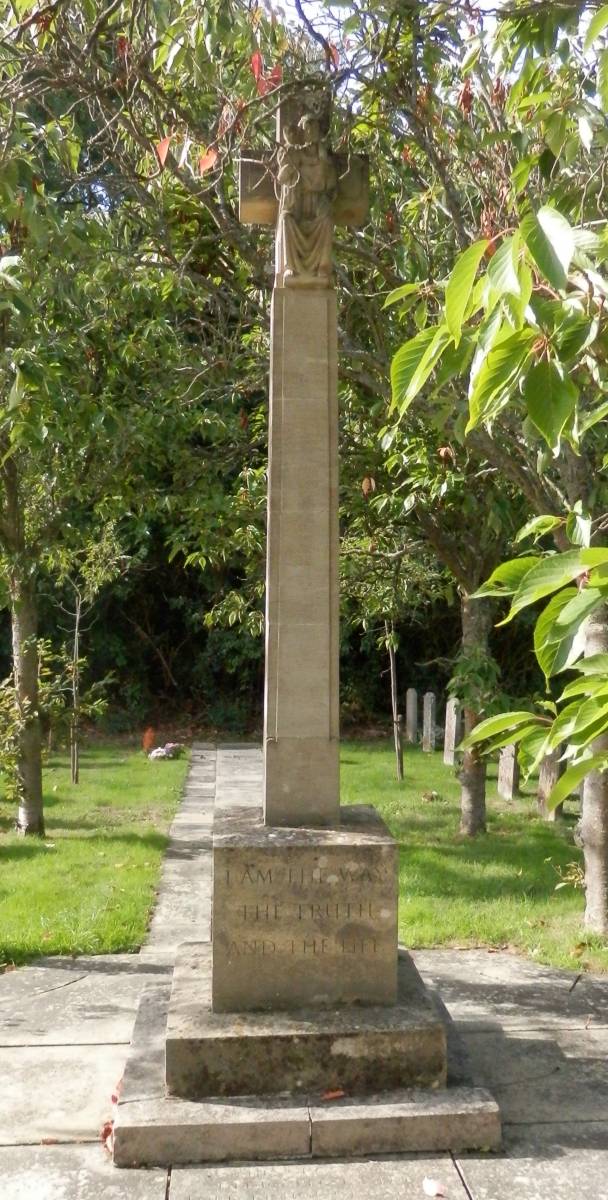
The church itself, this Trinity Sunday, was beautiful with white flowers and splendidly full, with a congregation whose ages varied from eighty to three years old, who were all to be witnesses to the Dedication by the Bishop of the new Churchyard Cross. The voices and the organ rose to the roof with resounding fervour, the singing quite filling the ancient building, and the words of the prayers dropped quietly into the silences between. The Bishop’s address was simple, sincere, even loving. (It was William Temple who, as Bishop, told parish priests “You must love your people into holi­ness.”) He explained much that lies behind the traditions of Christian burial and stressed that the body, one of God’s many gifts to man, must be treated with reverence, even when its period of usefulness is over.

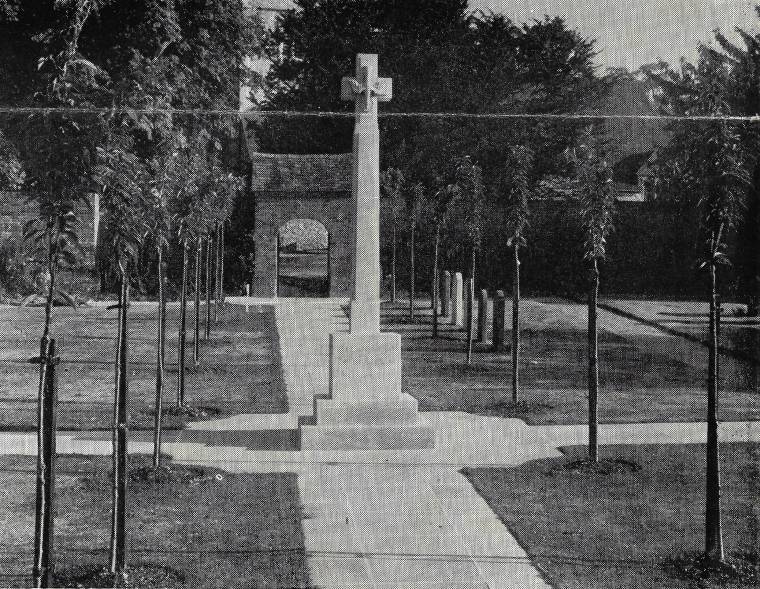
The recessional hymn took us all out into the churchyard. We went through the doorway marked “Jesus said, I am the Door” into the Churchyard extension beyond. Here, in this old walled garden already dotted with recent headstones bearing the names of our own dear friends, stood the Cross. Just as Sir Edward Maufe had designed and pictured it, so had Mr. Darsie Rawlins turned drawings into stone, and together they have given us this beautiful conception of Comfort from the Cross; for where we might expect to find the crucified Christ, we find instead the lovely figures of Mother and Child.

In a humble part of its history, this land had. been part of the Vicar’s glebe – his vegetable garden-and earlier still we find it described as a vineyard, perhaps to provide grapes for the Communion wine in the days when all communities had to be self-supporting. Twelve years ago, when this ground was consecrated because the churchyard was found to be full, there was born the germ of an idea for following mediaeval practice by having one central cross.. standing in benediction over all the graves.

The congregation stood grouped round this central cross, the centre of this churchyard, the centre of this service, and also at the centre of the new cruciform stone-flagged pathways, designed to be seen as a cross from the air. (What, I wonder, would our equestrian bishop of long ago thought of this fine gesture to the present age?) The Service of Dedication continued as Mr. Stanley Holloway read a beautifully appropriate piece from “Pilgrim’s Progress” ” … just as Christian came up with the cross, his burden loosed from off his shoulders and fell from his back … it was very surprising to him that the sight of the cross should thus ease him of his burden … ‘.

Then came the moment of dedication when the Lord Bishop said, “In the faith of Jesus Christ we dedicate this Churchyard Cross to the Glory of God … ”

We had done what we could to give beauty and comfort in death and, when the service was over, we came away through the green countryside with a strong sense of the past and yet a great hope for the future that we may be given the strength to devote ourselves while we may to the tremendous task of living our lives to the Glory of God.”

Parish Newsletter, June 1964, B.S. (Probably Barbara Saunders)


Footnote: Parish Newsletter March 1964: Oscar Muspratt writes:
“After several years preparation, we launched the special appeal for Sir Edward Maufe’s scheme for the permanent layout of the walled garden now being used as our churchyard. The most generous gift of £500 by Mr W.Q. Henriques was followed by…..As the year ended we had passed the £2,000 mark and now need only several hundred pounds to complete the scheme for Trinity Sunday 1964 when the Bishop of Oxford will take the dedication service.  The actual work is well in hand.”

Wilfred Quixano Henriques, OBE, gave his ‘generous gift’ of £500 in 1963, and sadly his wife Victoria died in the Spring of 1964, around the time that the cross was consecrated on Trinity Sunday, 24th May.  Wilfred died 04/1975 and is buried with his wife in plot 64, a few yards from the central cross.
This entry was first published by .

Harmony in a Country Churchyard

Country Life Magazine, 6th February 1969, Oscar Muspratt

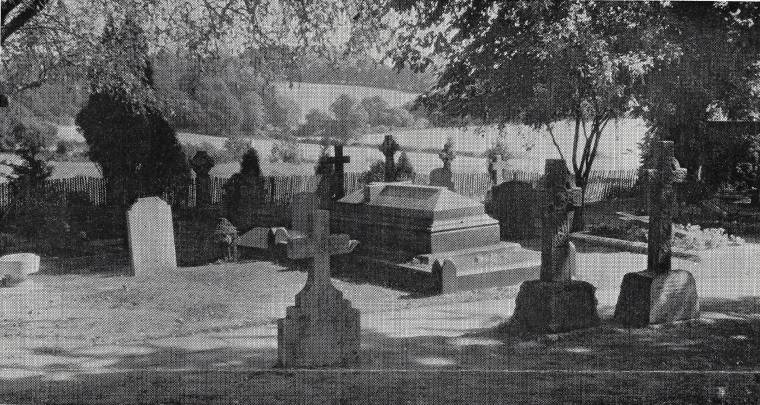
CHURCHYARD extensions are rarely things of beauty. The charm of an old churchyard, where the natural good taste of our ancestors is reflected in memorials that achieve harmony in spite of their dif­ferences, is too often marred by an anarchy of harsh mass-produced kerbs and crosses in incongruous materials on adjoining laud. Yet a churchyard extension can be made beautiful, as can be seen at Penn in Buckinghamshire, where a plan that was started almost 20 years ago has been worked out with great care and considerable success. Its example is one that might well be followed by others who are making plans for similar extensions.

The medieval church of Penn stands on a ridge with wide views of the Surrey Downs and the surrounding countryside, and the importance of preserving charm and peace of the place was recognised when it was found that more space was needed for graves. The appropriate site was at hand in an old walled garden on the downward slopes to the south, with access through a brick arch dated 1739, and Sir Edward Maufe was invited to be the architect of the scheme. He was asked to design a layout of the area so that its use for burials could be developed in ways that would show to the best advantage the unique character of the site.

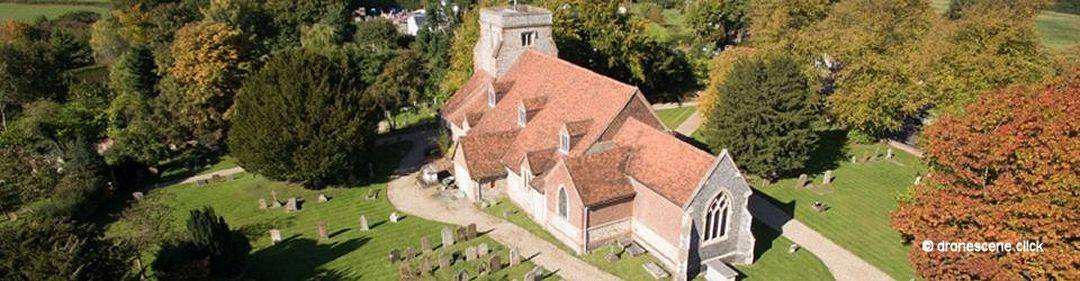
The central feature of the architect’s plan was an axial path of rectangular York stone paving leading southward from the entrance, intersected midway by a similar path running east and west, and flanked on either side by a row of flowering cherry trees. Two further lateral paths parallel with the axis can be added when necessary, and the rest of the ground is lawn with flower borders along the walls. In accordance with the early traditions of Christian burial a central cross of Clipsham Stone, 12 ft. high, stands at the intersection of the paths presiding over the whole space. Its head is carved with a Madonna and Child at one side, and a dove at the other.

I myself had shared in the planning of several war cemeteries during my service as an army chaplain, and knew the value of careful alignment of graves in maintaining the dignity of a plan. To facilitate mowing, it was decided to have only headstones, with a removable metal flower-container sunk level with the turf in front of each. Although there are no rigid limits of size, the headstones have been kept as far as possible to a width of 2 ft. or less and a height of 3 ft. or less. This has made for a balanced appearance through­out, and the avoidance of kerbs and flower­beds on graves has not only allowed the free passage of the mower but has also prevented unsightly neglect when relatives have no longer been able to tend them.

In addition to the space for burials, of which about a quarter has now been used, provision has also been made for memorials after cremations. The paved paths consist of central slabs flanked by smaller paving stones, about I ft. 3 in. by 2 ft. in size. Caskets containing ashes can be buried beneath the turf on either side of the path, and a memorial inscribed on the adjacent stone. There have been about 12 crema­tions since the churchyard exten­sion was started. A sample inscription was provided by the architect so that there should be conformity in the size of lettering and arrangement of lines.

English churchyard memorials have tended to degenerate into ugly and commercialised reminders of death instead of providing worthy commemorations of people’s lives. Yet a churchyard needs an atmosphere of beauty and peace to reflect Christian belief in the life to come. Many of the head­stones at Penn are by a local designer-crafts­man named Darsie Rawlins, who has regained something of the spirit of the 18th-century carvers. With good lettering on English stone, human feeling has been brought to each work, and several memorials have been made more interesting by in­cluding a coat-of-arms or regi­mental badge in the carving. Such craftsmen are rare in these days; their contribution brings aesthetic relief in a field where good sculptors once flourished, but which has become a desert.

THE CHURCHYARD EXTENSION. “The plan, started almost 20 years ago,
has been worked out with considerable success”

All the details of the scheme, including the siting of future burial spaces have been defined on the the master plan drawn up by a surveyor under the architect’s direction, and approved by the diocesan court. Families are en­couraged to make adequate provision for the upkeep of their graves and the general main­tenance of the churchyard. To guide them, the parochial church council has adopted model churchyard rules, has created a churchyard guild and has established a trust deed for corporate endowment. The parish council will also be urged to make a reasonable contribution from the rates towards maintenance.

Those who do not know Penn may find a visit rewarding. To enter the venerable church and to walk beyond it and see the view southward to the Surrey Downs is to discover a tranquillity worth preserving.

Oscar Muspratt, 6th February 1969.

Illustrations: Council for the Care of Churches.

This entry was first published by .

Penn’s Motor Racing Heritage

The graveyard at Holy Trinity Church, Penn, is unusual in that it contains the graves of no less than seven remarkable individuals who enjoyed motor racing in the 20th Century. Some were involved in the highest levels of the sport while others were very active enthusiasts at club level. None of them died participating in what is reputed to be a dangerous sport and most had long careers. In addition to being parishioners of Penn there are interesting links between them all.

  1. Francis Earl Howe 1884-1964
  2. Humphrey Cook 1893-1976
  3. Anthony Heal 1907-1995
  4. Len Gibbs 1904-1992
  5. Bluebelle Gibbs 1908-1972
  6. David Blakely 1929-1955
  7. Paddy Hopkirk 1933-2022

Interestingly Penn village continues to be a haven for racing motorists into the 21st century with Marino Franchitti among its residents.

© Oliver Heal, September 2022

This entry was first published by .

Francis Howe (1884 – 1964)

The Right Honourable Francis Richard Henry Penn Curzon, 5th Earl Howe, CBE, RD, PC, born 1st May 1884, lived at Penn House, Penn.

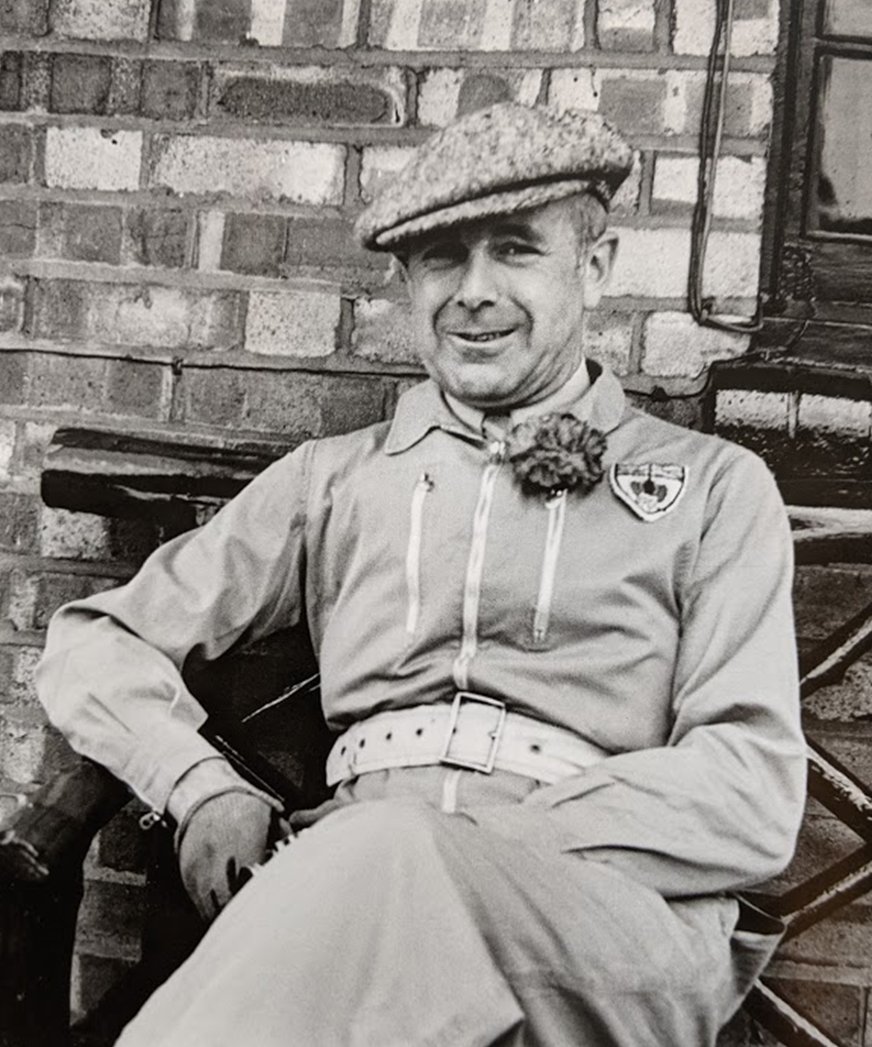
Francis, Earl Howe at Brooklands in 1936 wearing his trademark cap at a jaunty angle and his racing overalls with BRDC badge. (photo The Autocar)

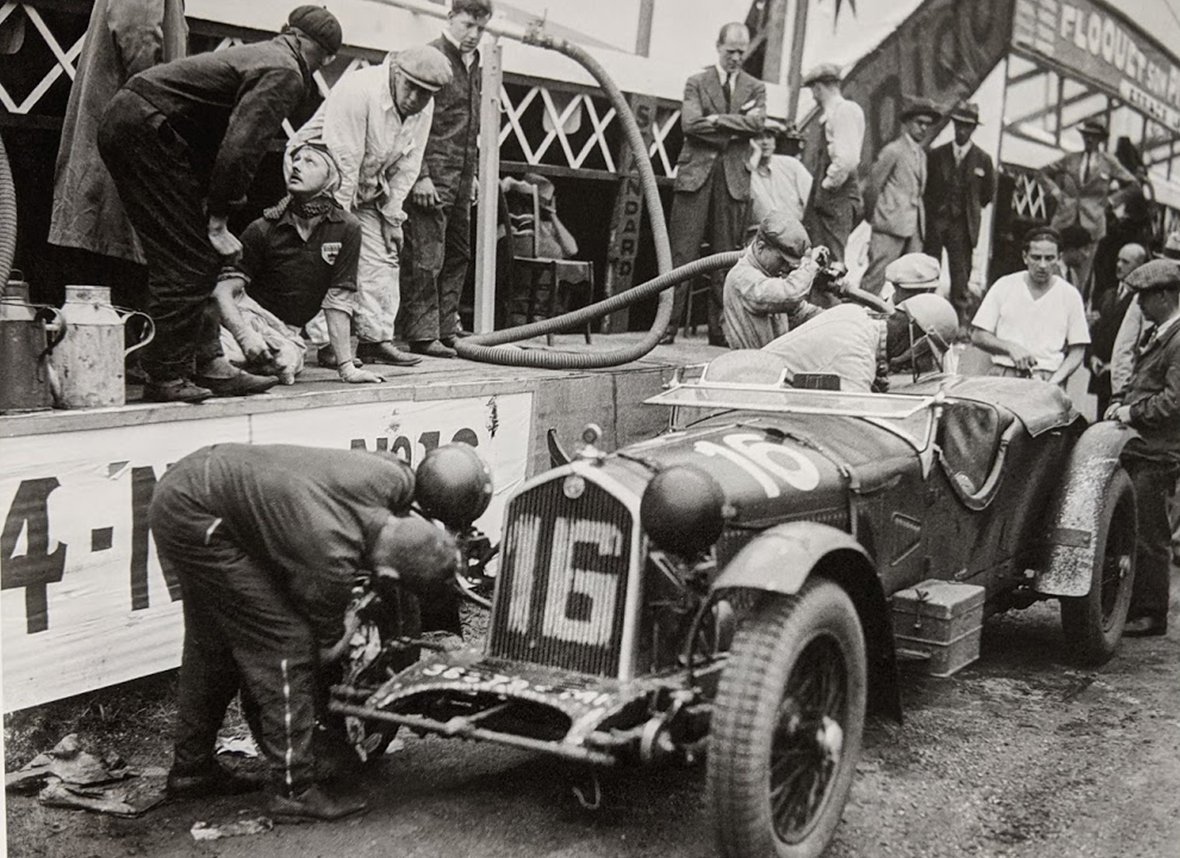
Francis Howe came to motor sport quite late, starting to race in 1928 by which time he was 44 years old. Over the following decade he was a regular competitor in long distance sports car races such as the Le Mans 24 Hour Race and its nearest British equivalent, the Brooklands J.C.C. Double Twelve – a 24 hour race split into two halves. He and co-driver Malcolm Campbell using Howe’s Bugatti Type 43 came first in the 3 litre class in the 1930 Double Twelve Race – Howe’s first major victory. The following year was even more momentous as he won the Le Mans 24 Hour Race in an Alfa Romeo 8C with Sir Henry Birkin as co-driver.  Howe competed no less than seven times in the Le Mans event but he did not win it again. He also took part in other classic long-distance races such as the Mille Miglia in Italy and the 24 Heures de Francorchamps on the Spa circuit in Belgium.

In the 1930’s Earl Howe, built the mile-long drive to the house, suitably banked, for his personal enjoyment and convenience. (Penn House Website)

The 1931 Le Mans 24-hour-race winning Alfa Romeo. Howe, in helmet leans into the cockpit while co-driver Birkin sits on the pit counter. (photo The Autocar)

In contrast Howe was also a regular competitor in short sprint events such as Shelsley Walsh Hill Climb and the Brighton Speed Trials.

Having started in sports car racing Howe was soon also competing in international Grand Prix races appearing at Monaco, Montlhéry, Nürburgring, Avus, and Monza. He indulged his passion for the sport by acquiring some of the most delectable and desirable racing cars that represented the very best engineering developments of the period. Notable amongst these were the 1 ½ litre, eight cylinder, supercharged Grand Prix Delages that were still very competitive in what was then known as the voiturette class. With these he was on the podium at Avus in 1932 and 1933 and also at Bremgarten and Albi in 1935. He purchased from Ettore Bugatti one of the first Type 51, 2 litre, 8 cylinder Bugattis to be built in 1931 and the following year bought one of the larger 4.9 litre Type 54 Bugattis, although the latter was not a great success. In 1935,when the works were disposing of their team cars, Howe bought one of the ‘ultimate’ racing Bugattis a Type 59, considered by many to be the most elegant pre-war racing car. With this he raced at Dieppe, in Switzerland and at home finished third in the B.R.D.C. 500 Race at Brooklands and second at the Donington Grand Prix.

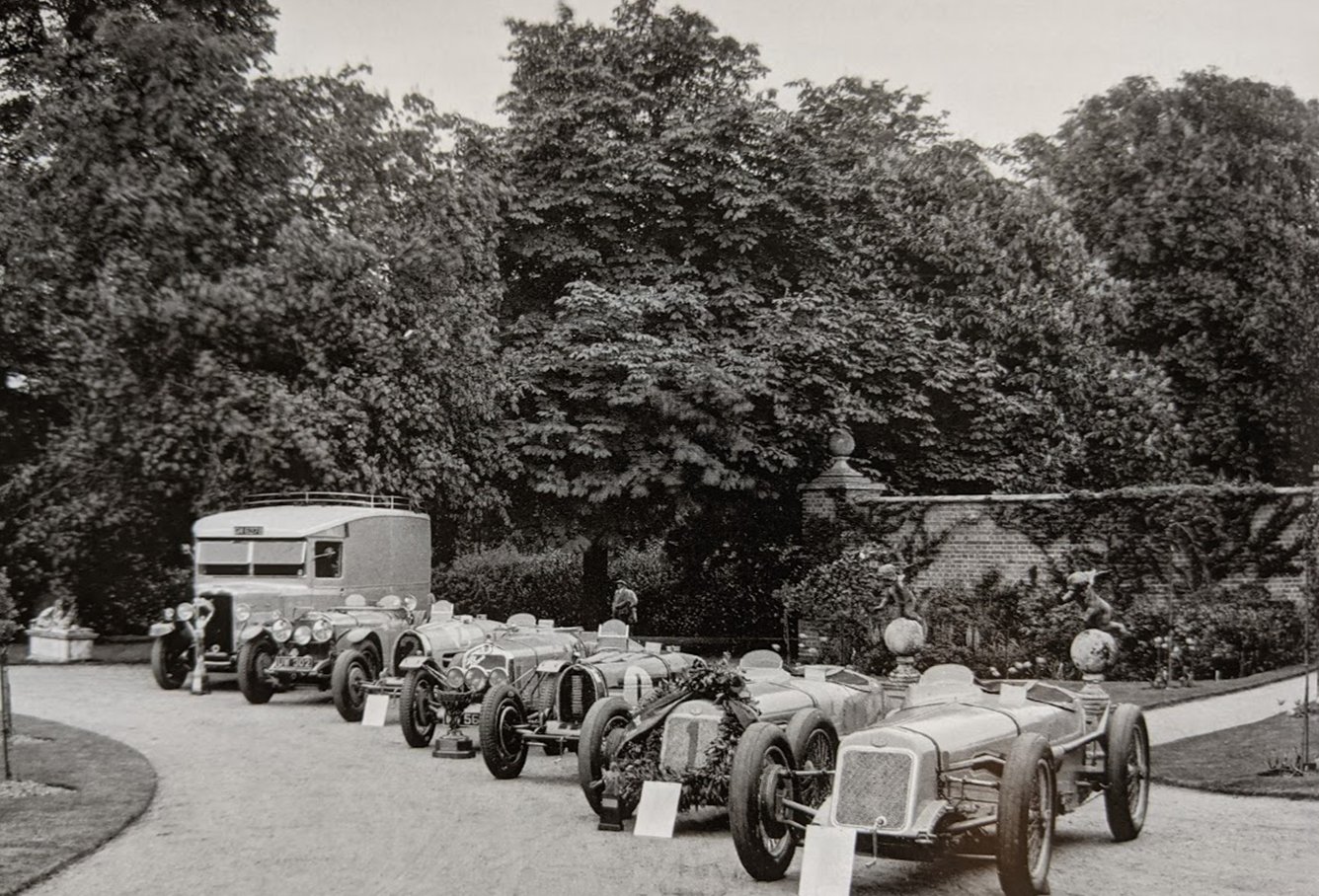
Earl Howe’s racing equipe at Penn House in 1932. Two Delages, two Bugattis, one Alfa Romeo, one Mercedes Benz and the Commer transporter. (Howe family)

By then Grand Prix racing was dominated by the state sponsored German teams and along with others Howe transferred his interest to the voiturette class. He acquired from Humphrey Cook an E.R.A. which he campaigned extensively for the next three years. As well as competing with this car in England and Europe he even took it to the USA and South Africa. He retired from active racing in 1939.

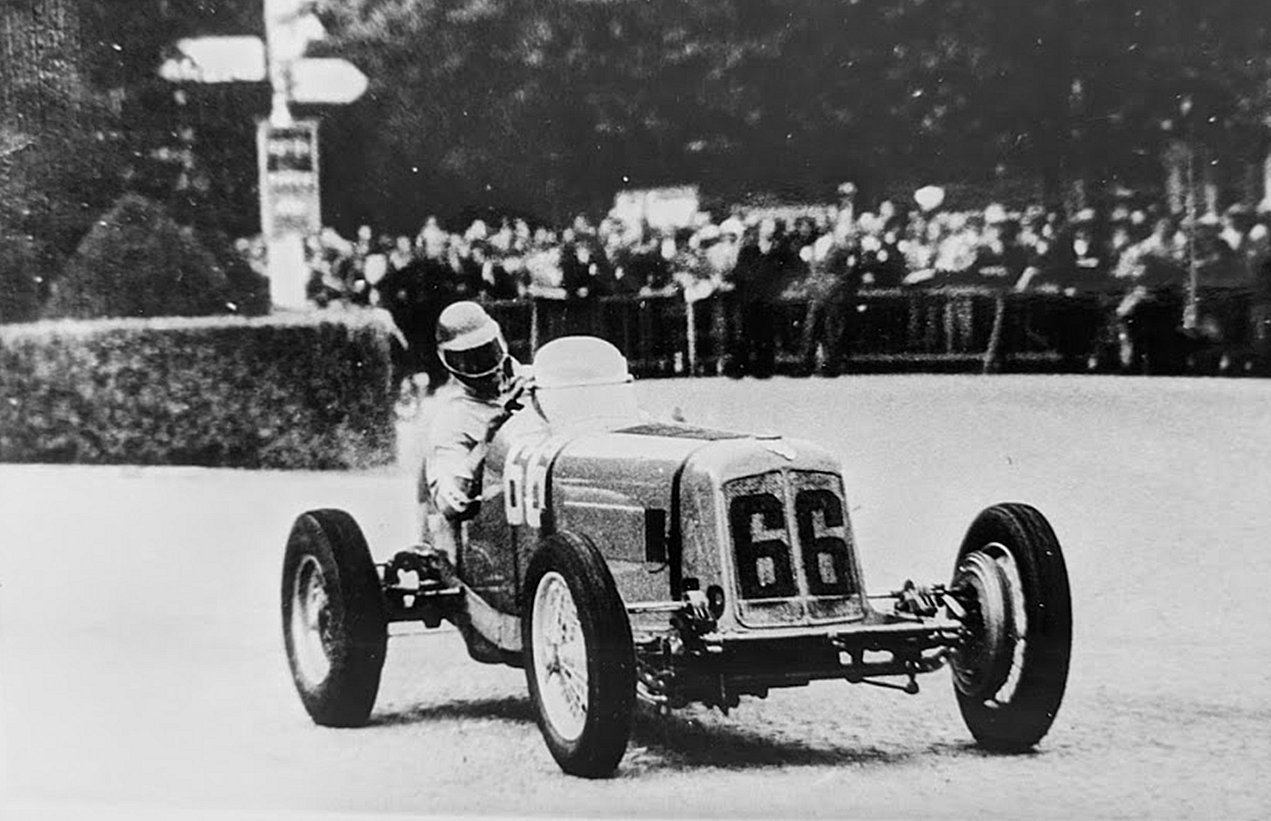
Howe racing his E.R.A. R8B at the Preis von Bern Race at Bremgarten in 1936 where he finished in 4th place.

Earl Howe continued to play a major role in the organization of motor racing for the rest of his life. He was President of the British Racing Drivers Club which still owns the Silverstone circuit. He was chairman of the Competitions Committee of the R.A.C. and acted as one of the British representatives to the CSI and the FIA. He is also remembered for being a member of the R.N.V.R., an M.P. and an active member of the House of Lords but that is another story.

He died on 26 July 1964 and is buried in the bottom right corner of the graveyard. Plot number 152.

Sources: Tim May, ‘Francis Howe, Motor Man par excellence’, GMS Publications, 2014.

© Oliver Heal, September 2021.

This entry was first published by .

George Slade (1886-1966) and Slades Garage

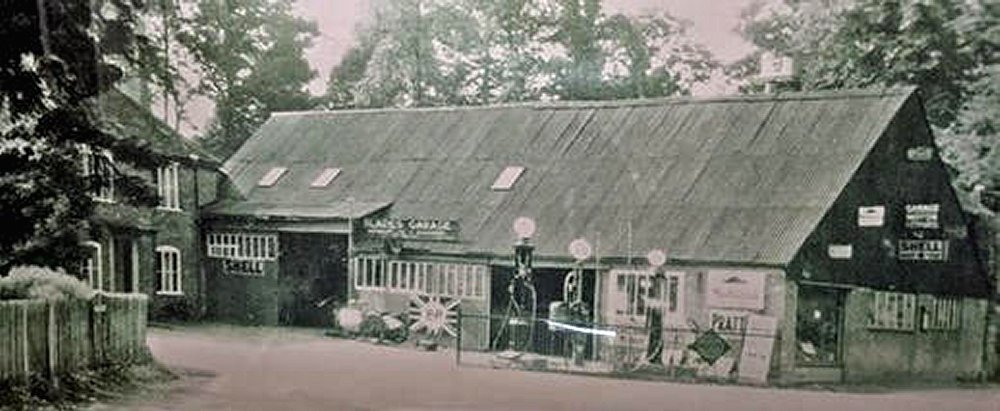
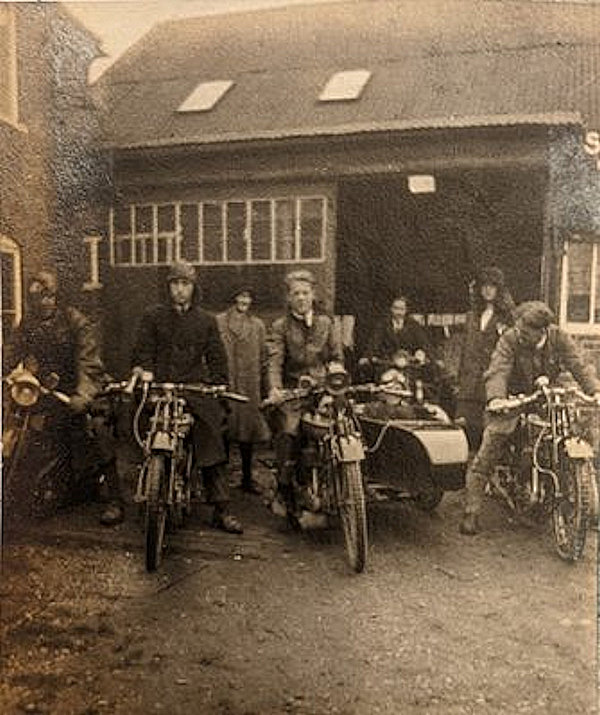
Slades Garage 1920’s

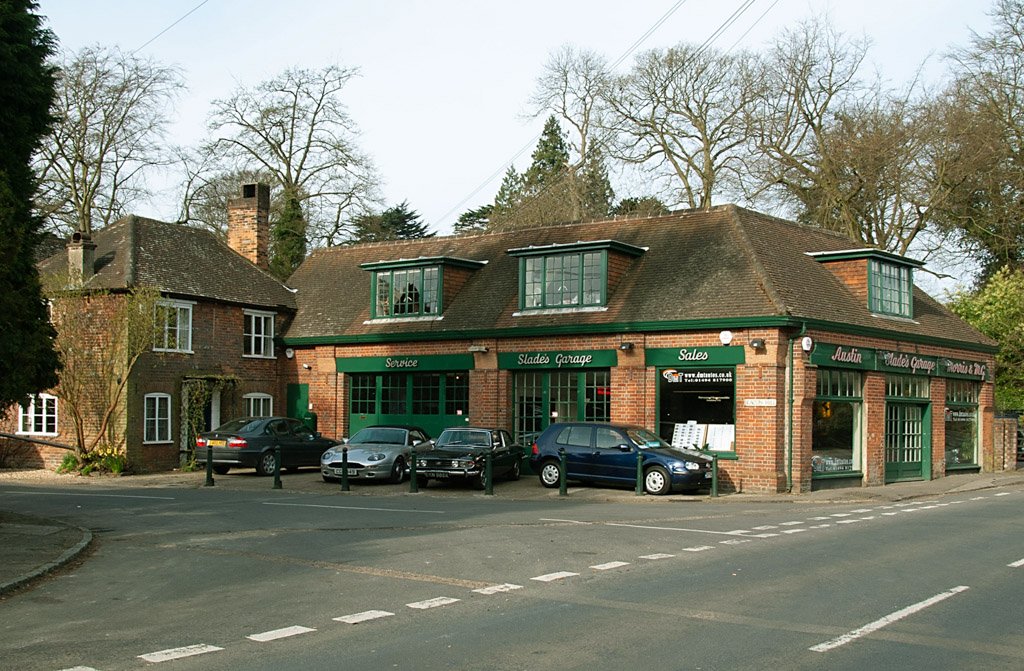
Slades Garage on the corner of Beacon Hill occupies the site of the Penn village forge that existed as far back as the first half of the nineteenth century and probably earlier.

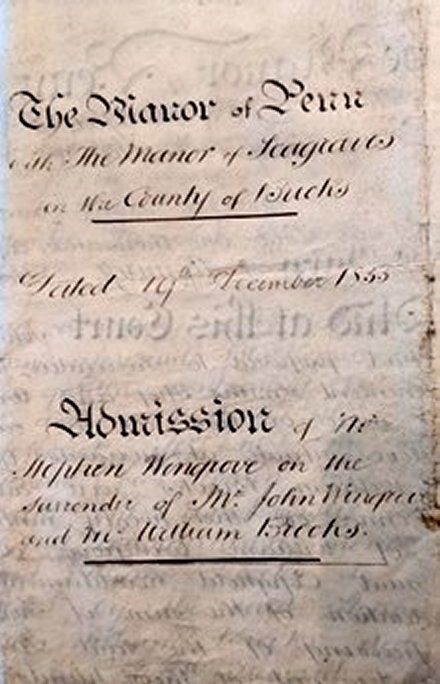
In 1853 John Wingrove and William Brocks handed over the forge to Stephen Wingrove as part of the Manor of Penn with the Manor of Seagraves. When Stephen died in 1879 his son Charles Wingrove was admitted to the tenancy. In 1891 Charles transferred the business to Walter Evans who, in 1899, was Enfranchised by the Manor of Penn to take on the freehold. Walter Evans (c.1864-1933) subsequently conveyed the property to George Slade in 1922 but continued to live across the road at Hampdens.

Although the forge still belonged to Walter Evans throughout the Great War, the 1911 census shows that George Slade, 1886-1966 (born in Coleshill), his wife Thurza 1886-1978 (née Wright, born in Winchmore Hill) and their daughter Blubelle were living there and running the business.

The Slades’ daughter Ruby Bluebell was born in Penn in 1908 so presumably by the time of the census they had already been there for at least three years. In the census George’s trade was given as Blacksmith, General & Shoeing. The change in trade from a forge providing metal-working services to local farmers, horse-owners and builders evolved gradually, to cater for bicyclists, motorcyclists and motorists so that by 1920 the directories described George Slade as Motor & Agricultural Engineer & Smith.

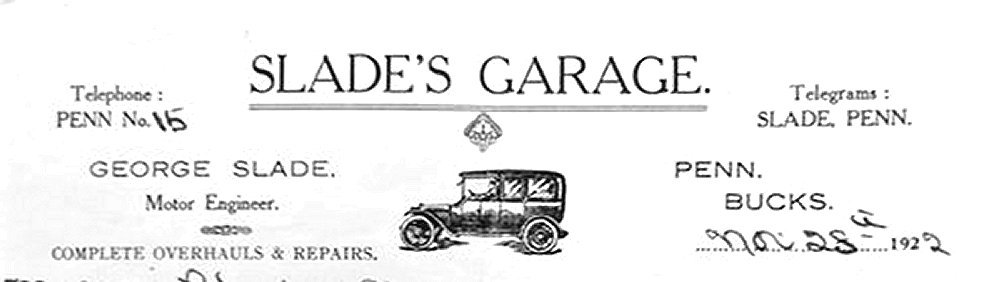
In 1922 he traded simply as “Slade’s Garage” with “George Slade, Motor Engineer”, offering “Complete Overhauls & Repairs”. Despite this we learn from Herbert Druce that the forge continued to be a crucial element of the business through the nineteen-twenties producing metalwork for a local builder.

Herbert Druce believes that the new showroom was built late 1920’s, early 1930’s by Frank Perfect who had his builders yard almost opposite Slades garage.  A new forge was built at the back of the garage, with its only entrance off Beacon Hill, and carried on shoeing horses for a few more years.

In his spare time George Slade was an enthusiastic motorcyclist taking part in long distance trials riding a motorcycle and sidecar combination. He sold Norton motorbikes but not exclusively as he dealt in other makes as well. He introduced his daughter to the sport and she accompanied him in the sidecar on a trial when she was 15 in 1923. Four years later the roles had been reversed and Bluebell was riding the 588cc Norton with her father in the sidecar.  Although it was said that this change had been made for health reasons and that George was no longer strong enough to handle the bike (he is known to have suffered ‘heart trouble’ for many years), we find him in 1930 taking part in the Lands End Trial. On that occasion when he rode from Slough to Lands End taking in various challenging hills ‘en route’, he was accompanied by his 15 year-old apprentice, Herbert Druce.

As well as running the garage and competing in trials, and being captain of the Penn & Tylers Green Football team which won the Wycombe League in 1911, George Slade had yet another passion to which he devoted much time. He was widely recognized as a skilled pigeon fancier, breeder and racer, successfully racing both North to Lerwick and south to Pau. He created the Swing Clear family of pigeons (eggs were even exported to Japan) and designed and made the Natural System of Nestboxes for his loft. During the Second World War he was a member of the National Pigeon Service (membership NPS/61) which provided pigeons for the Air Ministry to carry messages back often from deep within occupied territory

It was reported that he had just returned home from visiting his pigeon lofts when he died suddenly in 1996, aged 79. He is buried in the new churchyard on the left hand side in plot no.55. His wife Thurza died in 1978 and they share the grave.

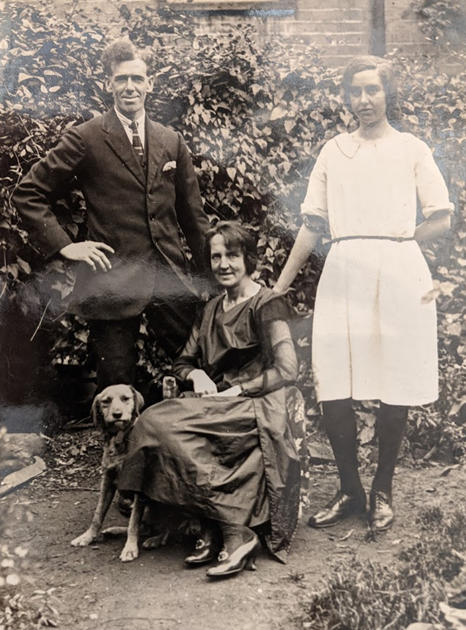
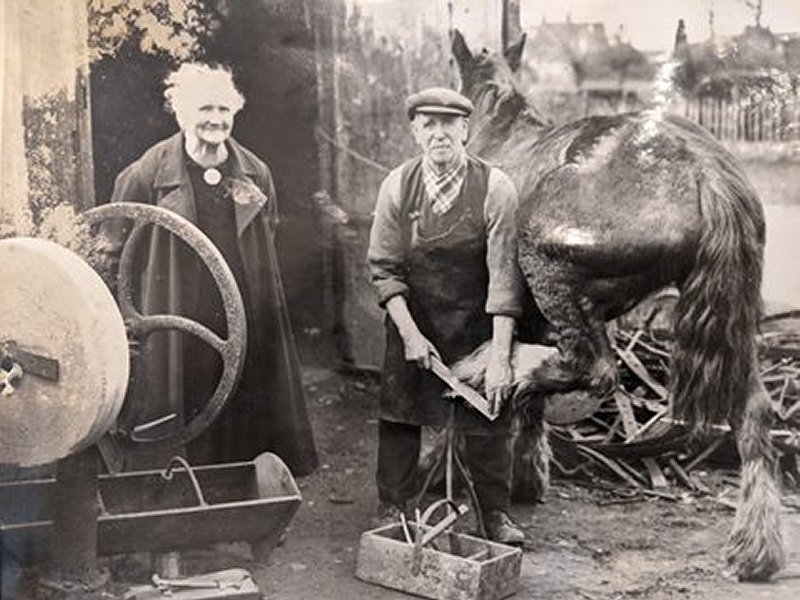
George & Thurza. Even in his later years, George still had to exercise his skills as a blacksmith.

His daughter Ruby Bluebell had married Len Gibbs in 1936 and together they had taken over the running of the garage. Bluebell died after a fall from a ladder when pruning the wisteria aged just 63 but Len carried on managing the firm until his own death in 1992. Slades Garage was then acquired in 1994 by Quentin Chases who has preserved its external appearance and maintained its activity in the motor trade. The garage now sells an exotic assortment of super-cars.

Thanks for much help in the preparation of this article goes to : Quentin Chases, Slades Garage Ltd, Peter Strutt, Miles Green, Ron Saunders, Herbert Druce, Norton Owners Club, Eddie Morton, Christopher White, Herbert Druce.

© Oliver Heal, September 2021

This entry was first published by .

Bluebelle Gibbs (1908-1972)

Bluebelle, as she was mostly known, was born in Penn on 7th November 1908 and given the names Ruby Bluebell (without a final ‘e’) Slade by her parents George and Thurza Slade. At that time her father George ran  the Penn village forge for its owner Walter Evans, only taking it over after the Great War when it became Slade’s Garage.

George Slade was an enthusiastic motorcyclist who competed in long distance trials. He introduced Bluebelle to bikes at an early age and she had learned to ride a motorbike by the time she was twelve years old. When she was fifteen she started accompanying her father on trials in the sidecar. In 1927 she was entered in her first trial at the controls of the 588cc Norton sidecar outfit with her father (apparently with a weak heart) now in the sidecar. Her ability rapidly shone through and she achieved “many successes” that year so that when she was eighteen she was part of the Norton Works team.

She won the 1928 Woodgreen Ladies Open Reliability Trial on a Norton 44 loaned by the works and took part in the renowned Colmore Trial with her sidecar combination. In 1930 she rode a 348cc Norton CJ and in 1933 was on a special competition version of the Norton 50.
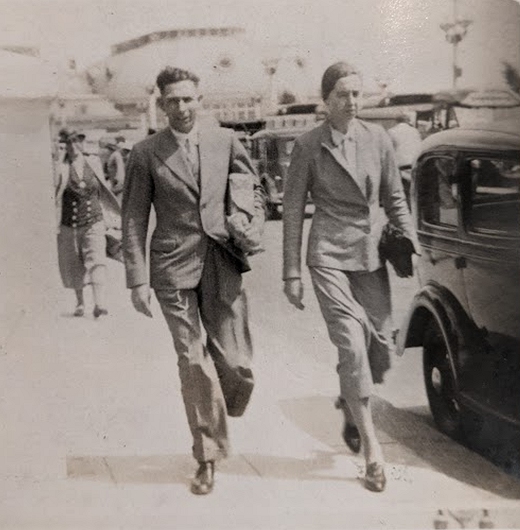
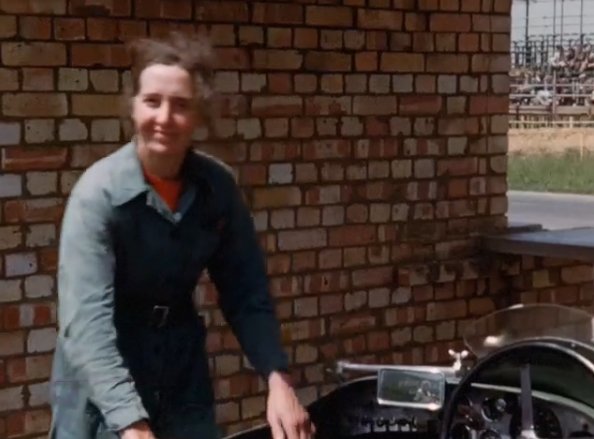
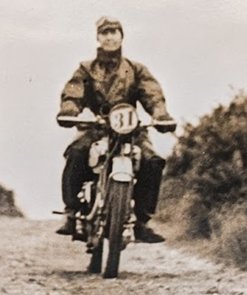
Bluebell on her trials Norton motorbike

Len & Bluebelle Gibbs.

Another regular competitor at these trials was a young man called Len Gibbs. Len and Bluebelle were married in the summer of 1936 and the following year she and Len effectively took over the running of Slade’s Garage. Bluebelle continued to compete and in 1939 Norton supplied a bike fitted  with a very special Elektron crankcase. Once events started again after the War, Bluebelle carried on entering 350cc and 500cc Trials Nortons and even taking to circuit racing at Silverstone in 1952.

Blubelle Gibbs, Silverstone 1952 (Filmed by Marie Partridge, of the Pinner Cine Society)

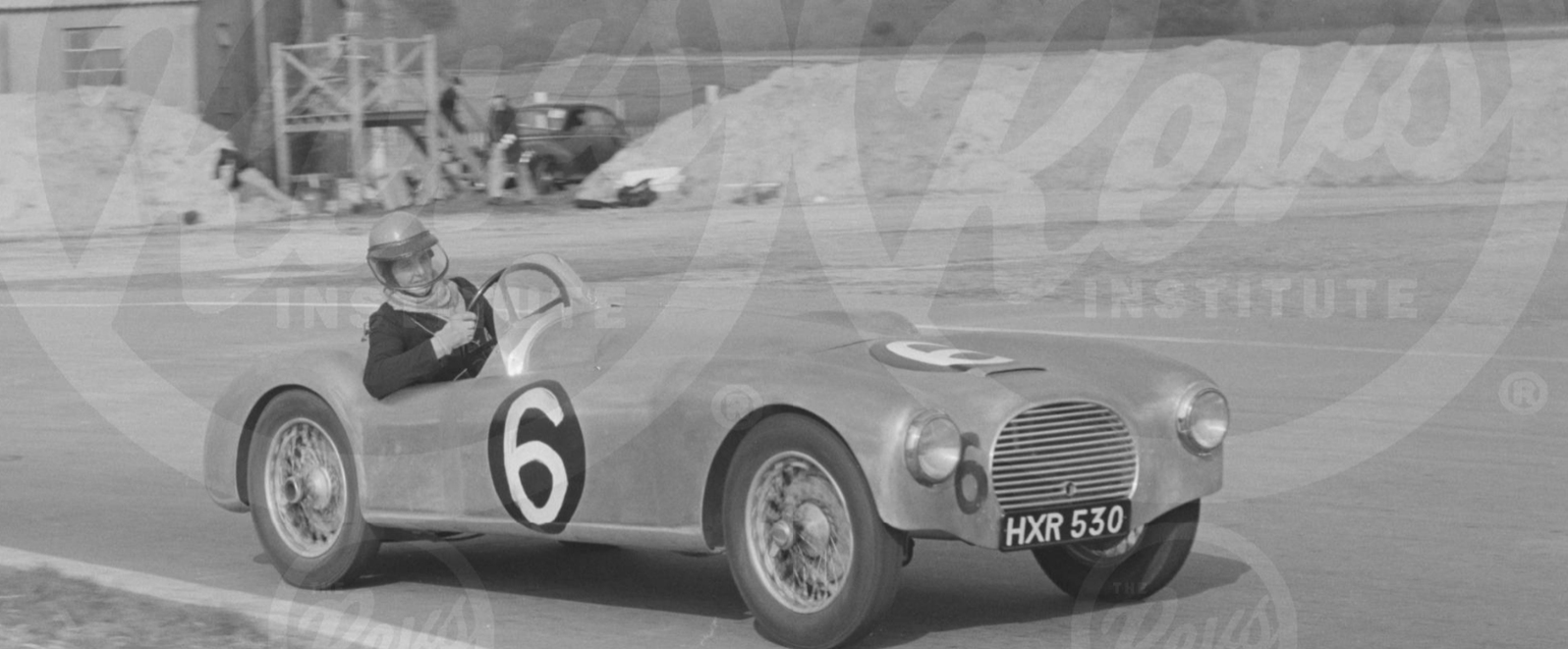
Racing on four wheels was perhaps more suitable for middle-age and from 1951 onwards she was regularly to be found at the wheel of the lightweight, ex-Le Mans H.R.G. that Len had bought and was developing. Over five years she raced it about half a dozen times a year in club events at Silverstone and Goodwood and was placed among the top three finishers on sixteen occasions. Not only was the power output of the engine improved over time but the car was also given a new all-enveloping body.

Bluebelle Gibbs racing the lightweight H.R.G. with a new all-enveloping body at the BARC Easter meeting at Silverstone in March 1953. She finished in 10th position. (Revs Institute/George Phillips)

The H.R.G. was succeeded by a Cooper Climax but Bluebelle was not happy with its rear-engine layout and after a brief unsuccessful interlude with a Lotus 11, it was replaced by a Lola Mk1 in 1962.

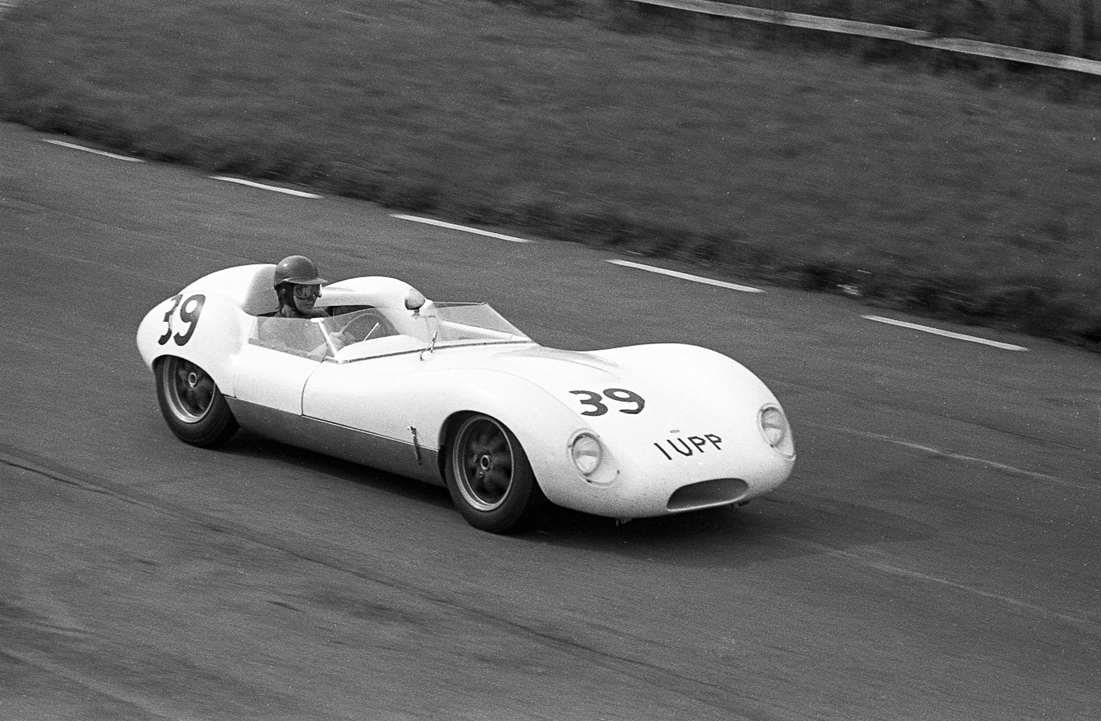
Bluebelle Gibbs racing the Lola Mark 1 at Silverstone on 1st September 1962 in the SUNBAC Trophy Race. (Photo John Hendy with thanks to Simon Hendy)

This is the car with which Bluebelle became most closely identified as she raced it for nearly ten years. The Lola was front engined and had a very light tubular frame clothed with a low, white-painted, aerodynamic two-seater body.  It was road registered (1 UPP) and was driven to and from the race circuits and on occasions she even took her aged mother along as a passenger. She was still regularly winning races with this car until 1969 and in 1970 took a second place at Silverstone.

Even though Bluebelle was now in her sixties and had been an active motor sport competitor for over forty years she had no intention of slowing down. During 1971 she bought the much newer, ex-Martin Raymond, Daren Mk2 sports racing car which held 1000cc lap records at a number of circuits. She intended to race this car in 1972 but tragedy intervened. On Easter Saturday she was trimming the wisteria on the front of the cottage when the ladder slipped and she died from brain damage as a result of the fall. She was 63 years old.

She is buried in the new churchyard in plot no. 75, the penultimate grave on the right of the left-hand path. The name engraved on the headstone is Bluebelle Gibbs even though her given names were Ruby Bluebell. The inscription reads: ‘Loved and admired for her achievements, her humility and her kindness’.

Thanks for much help in the preparation of this article goes to : Quentin Chases, Slades Garage Ltd, Miles Green, Ron Saunders, Herbert Druce, Norton Owners Club, Eddie Morton, Christopher White.

© Oliver Heal, September 2021

This entry was first published by .