Monuments and Memorials

Baroness Sophia Charlotte Howe (1761–1835)

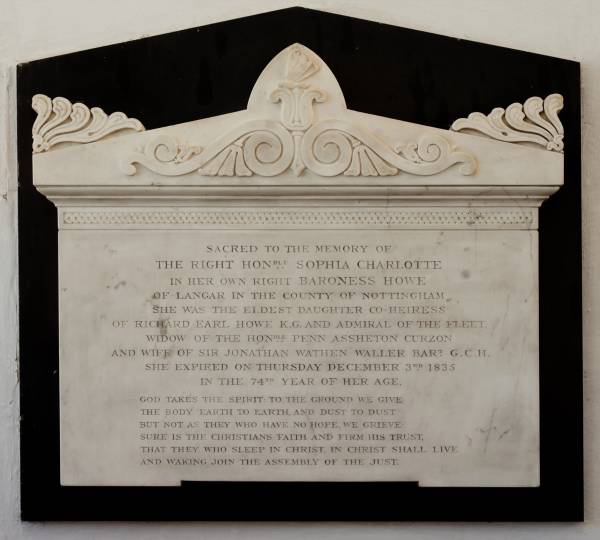
13-baroness-howe-1835_600A previous article focussed on the large marble monument to Viscount Curzon (1730-1820) by Sir Francis Chantrey. This next monument to his daughter-in-law is also by Chantrey although much smaller. It was described by a contemporary as ‘chaste and elegant’.

Sophia Charlotte Howe was the eldest of three daughters of Admiral Earl Howe. He had no sons and she was allowed to inherit his earlier barony and so became Baroness Howe in her own right.   She married Viscount Curzon’s eldest son Penn Assheton Curzon in 1787 and there are two portraits of her in Penn House by J.W. Walker.
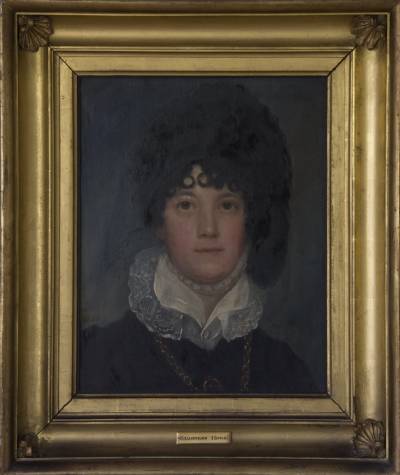
She had two sons and two daughters of whom three died early, aged 3 months, 16 and 29.   Only one son lived on into old age and he became Earl Howe. He was named Richard William Penn and she called him Penn.

A few years ago a small leather-covered notebook was given to me with Memorandums for my dear Penn scratched faintly on the cover. It had been kept by Baroness Howe between 1798 when her husband died, until 1813 when Penn, by then her only surviving son, left her guardianship.   She described it as ‘a kind of journal of every transaction of any moment in which I had been engaged’ on account of the properties of her two young sons.

There are several interesting references to properties in Penn, Penn Street and Holmer Green where she seems to have bought any significant properties which came on the market. Property was a good investment with inheritance tax at only 2½%. Those easily identifiable were:

French School – In 1801, £6,900 for the ‘large building now let to Government for a French School situated at Tylers’ Green in the Parish of Penn’ and she noted that ‘I bought it solely for the accommodation in future of my son.’

Beacon Hill – In 1807, £1,450 for ‘an Estate & Wood situated on the Beacon Hill at Penn’. This was a house and 27 acres where Thatchers Field now stands.   I have a map of the estate with field names.

Pauls Hill – In 1808, £635 for several cottages etc at Penn Church. These must be the cottages in Pauls Hill.

Tylers Green – In 1809, £350 for four cottages & a Blacksmith’s shop at Tylers’ Green. This could be at French Meadow on Elm Road.

The last full entry is a poignant one, ‘Mr Steele signed the Deed in Chancery taking from me the care of both my dear Penn’s Person & his Property.’

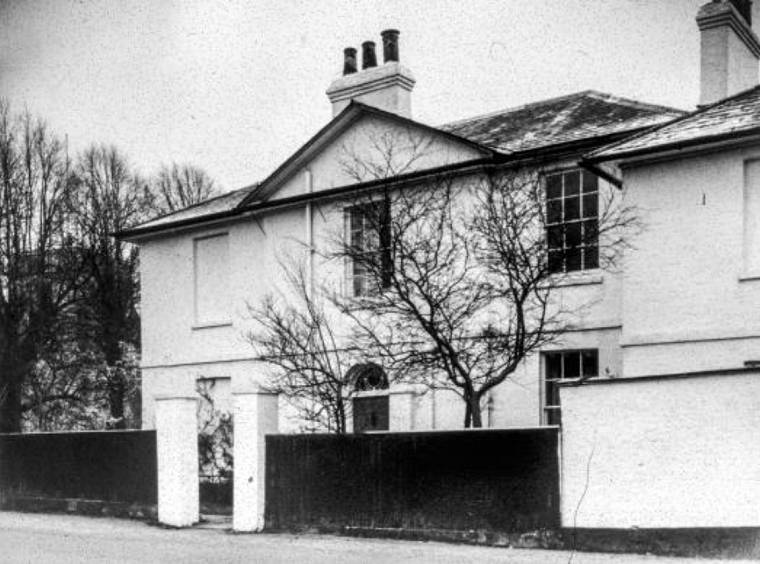
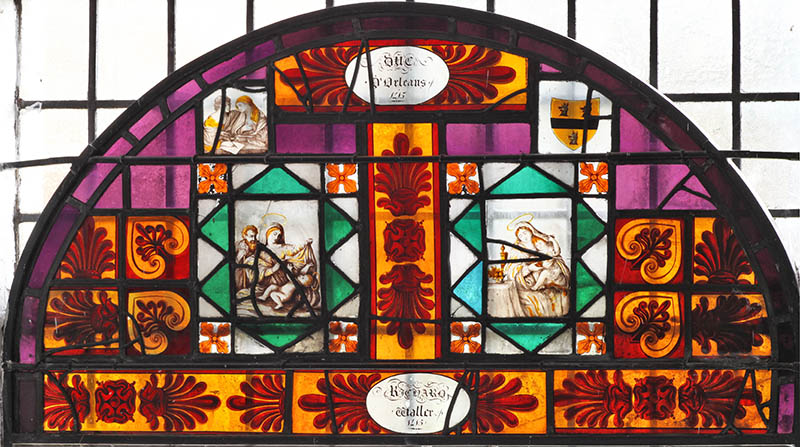
She married again in 1812 to Jonathan Wathen Phipps, oculist to George III.  In 1814 he changed his name to Waller and inherited his maternal grand-father’s estates. He was knighted in 1832 and became Sir Jonathan Wathen Waller. The semi-circular stained glass window in the chancel comes from that marriage, and  may have come from their house or chapel.   The window commemorates the battle of Agincourt 1415, where the Duc d’Orleans was captured by Richard Waller. It includes small panels of 16th century Flemish glass and the Howe crest.
More information on the Waller Window ..

Baroness Sophia Charlotte Howe died in 1835 and is buried with Viscount Curzon at Penn.

Transcribed from The Bucks Gazette and Bedford Chronicle Saturday December 12th, 1835

“The remains of the late Baroness Howe, Lady of Sir Wathen Waller, will be removed for interment this day, from Pope’s Villa, Twickenham, to the family mausoleum at Penn, near Beaconsfield. Her ladyship’s demise was very sudden, as express was sent off to her son, Earl Howe, at Gopsal Hall, in Leicestershire, but three hours before he arrived the Baroness had breathed her last. Her Ladyship was in her 73rd year. Earl Howe and his three eldest sons remain at Penn House to attend the funeral.”

© Miles Green, Penn Parish Newsletter, No.3, April 2008
Photographs © courtesy Eddie Morton ARPS and Micheal G Hardy (Stained Glass panel)
This entry was first published by .

The Waller Window in Penn

This small stained glass addition to a larger plain window on the north side of the chancel of Holy Trinity, Penn, has always been a bit of a mystery.  It names ‘Duc D’Orleans 1415’ at the top and ‘Richard Waller 1415’ at the bottom and is clearly designed to commemorate a Waller family tradition that their ancestor had fought at the battle of Agincourt and taken the Duke of Orleans prisoner. See: The Waller Family Story (opens in new tab)

The shape of the Penn window might suggest that it was originally designed to go over a door.

There are no Wallers in the Howe, Curzon or Penn family history, but the 1st Earl Howe’s widowed mother, Baroness Charlotte Sophia Howe, married again in 1812 to a Jonathan Wathen Phipps (1769-1853) whose grandmother was a Waller.  He changed his name to Waller two years later in recognition of his maternal family’s illustrious pedigree and soon after was made a baronet by the Prince Regent.   He was appointed Oculist to the Royal Household in 1796, serving as the eye doctor to George III, George IV and William IV as well as founding one of London’s earliest eye hospitals, the Royal Infirmary for Diseases of the Eye.   He later became Groom of the Bedchamber to William IV.

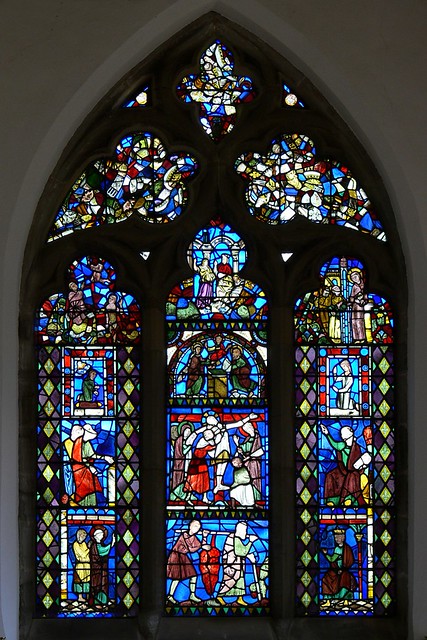
A key to the mystery has recently been spotted by Earl Howe in Ruth Hayward’s biography of Sir Wathen Waller (‘Phippy’ published in 2014 by Brewin Books).  In 1820, Sir Wathen Waller was despatched on a shopping expedition to Paris by Princess Sophia, fifth daughter of King George III.  Waller’s notebook listing his various purchases has survived and in it there is an entry showing a payment of 3,600 francs for several panes of stained glass from La Sainte Chapelle on the Ile de La Cité in Paris. The chapel, which dates from the 13th century, had suffered some vandalism during the French revolution, and it would appear that the fragments of glass had landed up with a Parisian antiques dealer. Some long time after he got home, Waller presented this stained glass to King William IV who came to the throne in 1830. The King in turn gave it to Lord Howe (then Lord Chamberlain to the Queen), who used it in the refurbishment of the East window of St James the Greater Church in Twycross near Gopsall in Leicestershire, then the Howes’ main estate. Could it be that some of the odd bits of glass not used in Twycross ended up in Penn?

St. James the Greater, Twycross

A note by the National Churches Trust records that Twycross church was restored by Earl Howe in 1840 and that the stained glass of the East window had originally come from Sainte-Chapelle in Paris, Saint-Denis near Paris, Le Mans cathedral, and Saint-Julien-du-Sault in Burgundy.   They had been arranged by Thomas Willement, a prominent Victorian stained glass artist.  Whereas Twycross is a magnificent example of a traditional and complex east window, our Penn Waller window is very simple, but pleasing.  It has only three parts using medieval glass and overall it looks as if it was carefully designed for the particular purpose of celebrating the Waller/Agincourt history and the Waller/Howe connection through marriage. (See: The Waller Family Story (opens in new tab))

There is a twenty year gap between the Paris shopping expedition of 1820 and the 1840 restoration of Twycross church.  It would seem very possible that Sir Wathen Waller commissioned someone, perhaps Thomas Willement, to design the Penn window soon after his return from Paris. He was already married to Baroness Howe, had changed his name by then and may have been keen to proclaim both the Waller and Howe connections to an aristocratic society, some of whom saw him as a social upstart. Our former Vicar, The Revd Oscar Muspratt, supposed that the window had come from the top of a door in one of the Penn/Waller houses and this could well have been the case. Sir Wathen died in 1853, long after his wife, and the 1st Earl Howe could have then arranged to install the window in Penn Church, perhaps at her request or in memory of her.

However, there is still one other aspect to be considered.  The Waller window in Penn Church is exactly the same width as the outside window to which it is secured.  Is this just a lucky chance or was the Waller window designed specifically to fit in the existing width with the small size and shape dictated by the few pieces of medieval glass available?   Or was the existing window altered to make the Waller window fit?  The window in the wall of the Lady Chapel directly opposite is the same size and shape and the two windows seem to have been designed as a complementary pair.  Were both altered to accommodate the Waller window?

This entry was first published by .

The Waller family story

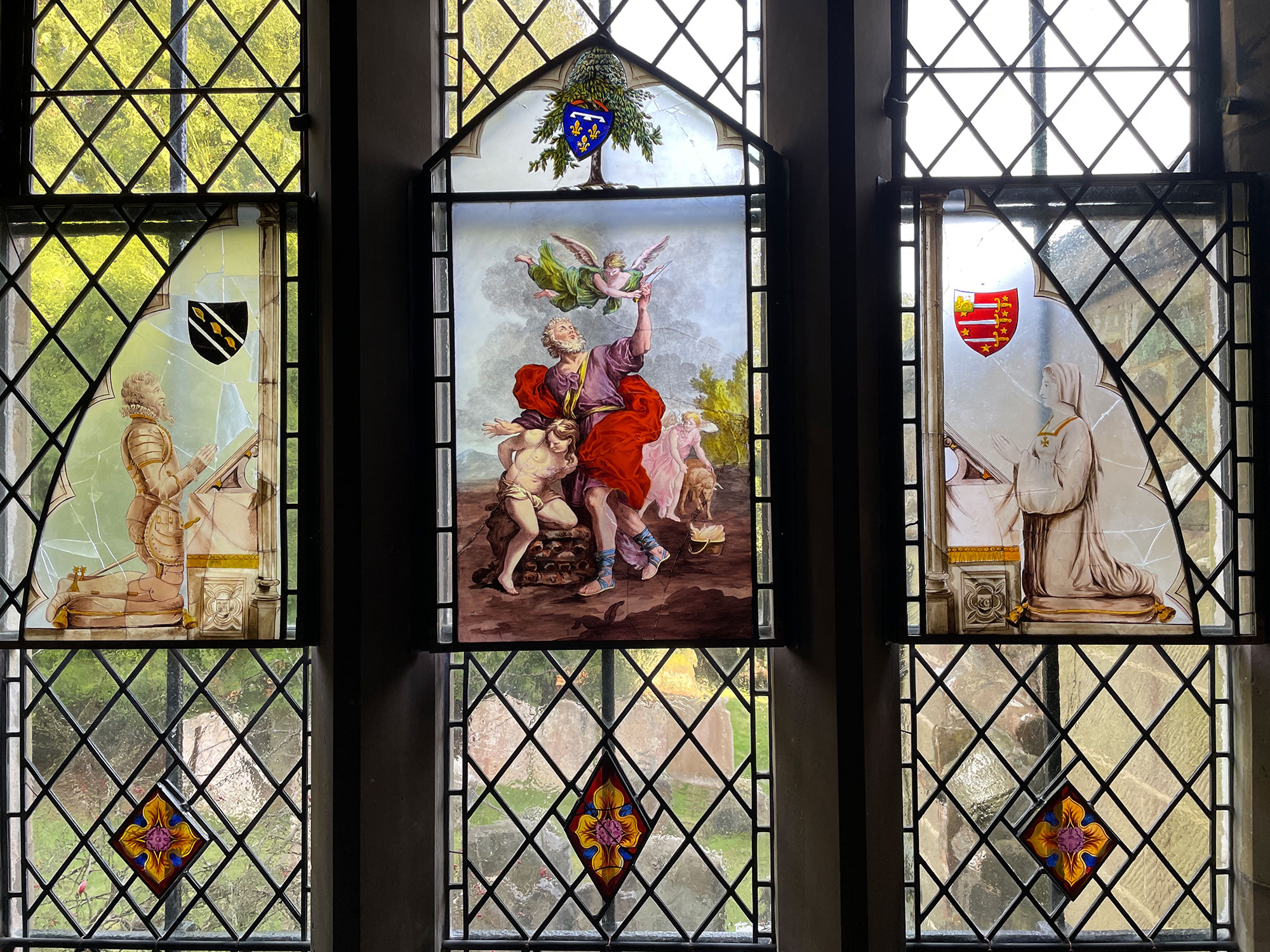
The Waller family story is, predictably, a romantic one.  It has Richard Waller finding the Duke, buried but unharmed beneath a pile of bodies. The Duke then surrendered to him whilst they were standing under a walnut tree, in consequence of which Waller was knighted on the field of battle and then hosted the Duke at his manor house at Groombridge in Kent for the next 25 years awaiting payment of the probably huge ransom.  It is claimed that he was given permission by Henry V to augment his arms by adding the Duke’s arms of three fleur de lys, showing them hanging from a walnut tree.  There is a stained glass window celebrating Richard Waller’s story in Groombridge’s parish church of St Mary Speldhurst in Kent. However, it is very different from Penn’s Waller window as can be seen on Speldhurstchurch.org which dates it to c.1800, possibly the work of James and Margaret Pearson.

More sober authorities tell a rather different story.  Charles, Duke of Orleans, although only 20 years old at the Battle of Agincourt, held a high command as the King of France’s nephew.  After the battle ended he was indeed found unwounded but trapped under a pile of dead bodies and surrendered to his captor.  King Henry V ordered that he be taken back to England and that he was not to be ransomed or harmed. The refusal to allow a ransom to be paid was presumably because the Duke would be a focus of resistance to the English invasion of France.  He therefore spent 25 years as a prisoner in England.  He was initially imprisoned in the Tower of London, but his captivity was not particularly difficult.  He was then moved around the country between various noble households and castles, but often treated more like a guest under surveillance than a prisoner.  He wrote many poems and ballads in both English and French and  according to one source was speaking better English than French by the time he was finally able to return to France in 1440 where he married and had a son who later became Louis XII.

The addition of the Orleans fleurs de lys to the Waller arms did take place, but apparently much later, sometime between the Herald’s Visitations of 1592 and 1619, long after it was possible to verify the legend.  There is a good deal of comment on the internet and one convincing suggestion is that this permission to augment the Waller arms was based on a confusion – that Richard Waller did serve as a man-at-arms at Agincourt under the Duke of Clarence and also served in France on later occasions, that he did not capture the Duke of Orleans, but that he was responsible for the custody of the Duke’s younger brother, Jean, Count of Angoulême, then aged 12, who had been given as a hostage to the Duke of Clarence following the 1412 campaign in France and who was not released until 1445.

In sum, Richard Waller was at Agincourt, but there seems to be no evidence that he discovered the Duke or that he subsequently looked after him for years on end.  However, if he did have some responsibility for the Duke’s younger brother then it is possible, even probable, that the Duke at least visited his Groombridge manor house.   Family memories were inflated over the generations, as they often are, and a belated application was made many years after the event to augment the Waller arms with the fleur de lys and walnut tree.  There are unresolved uncertainties here which must await a future researcher.

Miles Green, September 2025.

This entry was first published by .

1st Countess Howe (1800–1836)

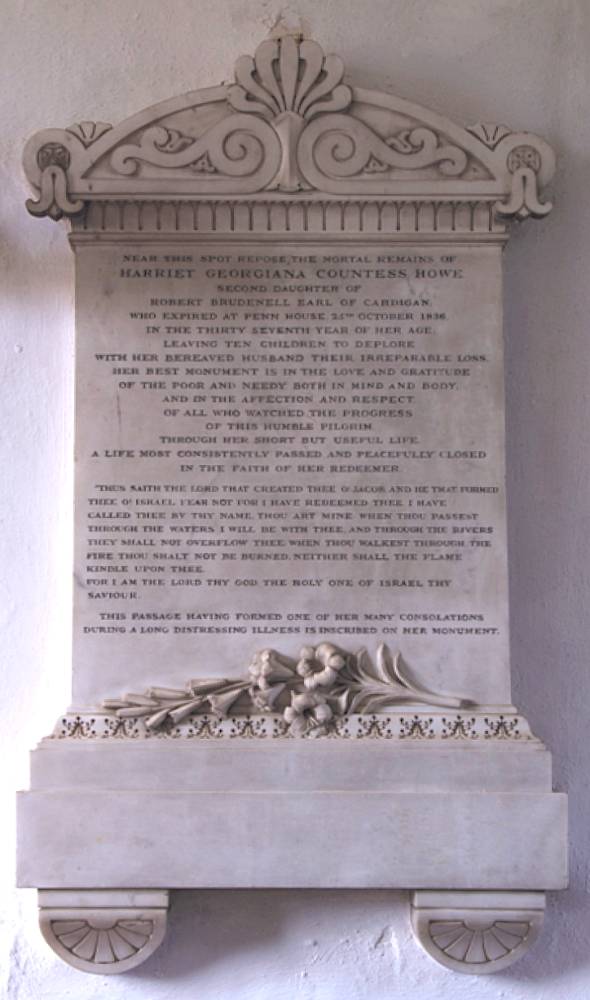
We have so far looked at two monuments by Sir Francis Chantrey (1781-1841), deemed to have been the greatest English sculptor of his generation – the large and finely detailed marbled carving to Viscount Curzon (1730-1820) on the north wall of the chancel and the ‘chaste & elegant’ one to his daughter in law Baroness Howe (1761-1835) on the opposite wall.

There is a third monument by Chantrey on the west wall of the chancel overlooking the choir stalls. It is to the 1st Countess Howe (1800-1836). She was the Lady Harriet Georgiana Brudenell, the second of eight daughters of the Earl of Cardigan and it was her only brother who led the Charge of the Light Brigade at Balaclava in 1854. She was only 20 years old when she married the Hon. Richard Curzon on 19 March 1820, just two days before his grandfather, Viscount Curzon, died and he inherited the viscountcy. A year later he took the additional name of Howe by Royal Licence and at only 24 was created Earl Howe, the title first held by his maternal grandfather, Admiral Howe.

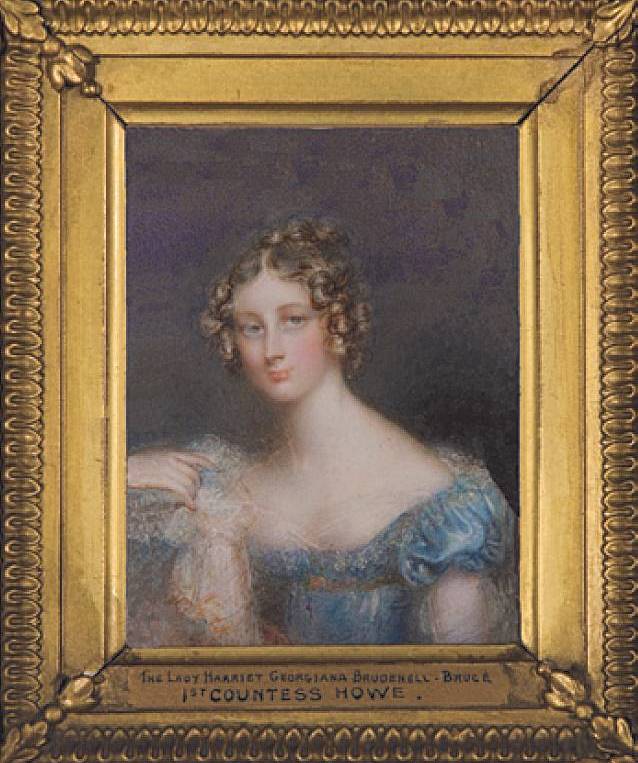
The two miniatures illustrated are both from Penn House. The first almost certainly dates from the year of her marriage. It was painted by Mrs Anne Mee, who had completed an important commission for George IV in 1814 to paint a series of miniature portraits of fashionable ladies. Her surname is incorrectly shown on the frame as Brudenell-Bruce.

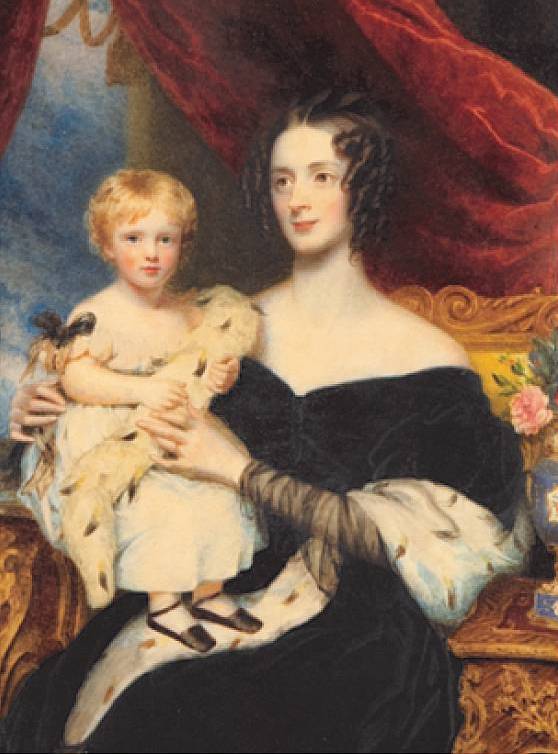
The second miniature was painted c.1823, showing her with her eldest son George Augustus Frederick Louis, later 2nd Earl Howe. She had 10 children by the time she died aged only 36, after what her monument describes as ‘a long and distressing illness’. Her seven boys and three girls all survived into middle or old age with one surviving until 1914. Her eldest daughter married the Duke of Beaufort and her second the Earl of Westmorland.

Queen Adelaide thought she was a strange woman, always ‘saying and doing just what came into her head’, and this view is supported by an anecdote in the Queen’s biography (Queen Adelaide by Mary Hopkirk, Albermarle Press 1946) to which Earl Howe alerted me. She and her husband were traveling by carriage with the King and Queen (King William IV and QueenAdelaide to whom Earl Howe was Lord Chamberlain) on a particularly hot day. Without warning, Lady Howe “first rested her leg on her husband’s knee (to his great confusion) and then stuck it out of the window”.

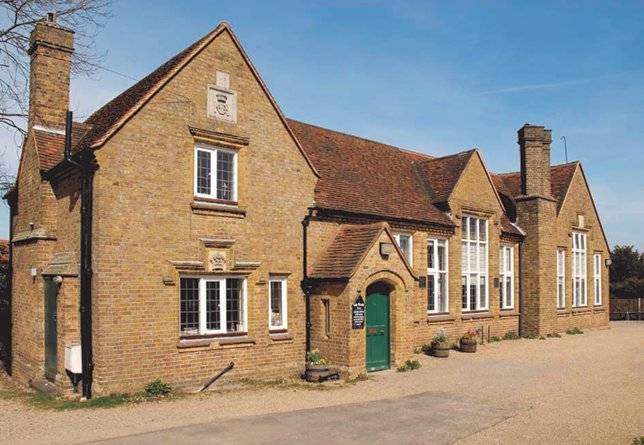
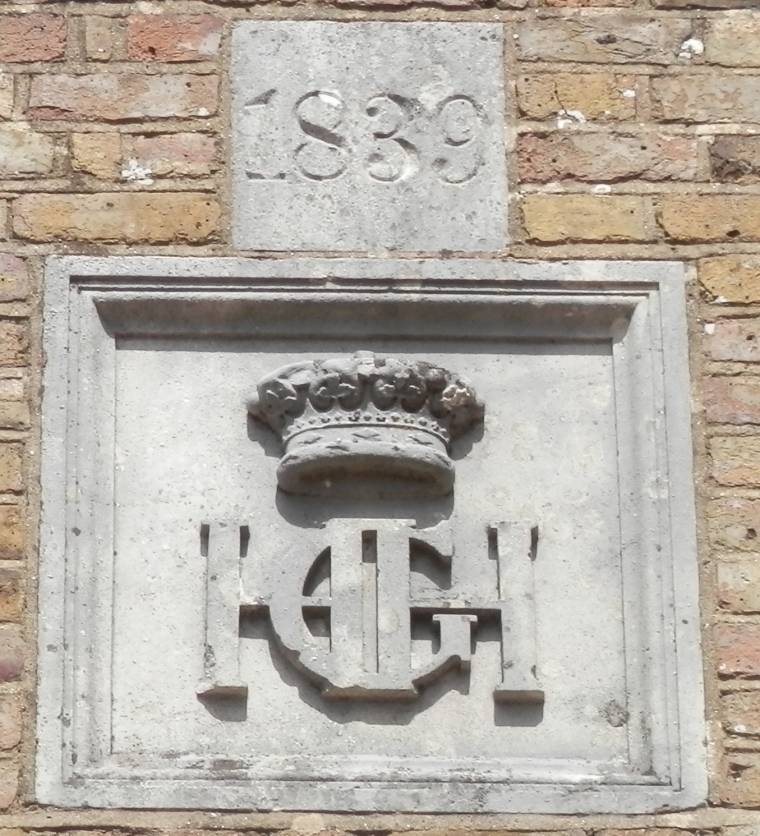
Nevertheless, her husband seems to have been very fond of her because it was in memory of his young countess that Earl Howe built the first girls’ school in the parish in 1839. It was called a Girls’ Working School and clothed and educated about 36 girls paid for by him with contributions from Queen Adelaide and by several of the principal inhabitants of the parish.

The school-room was the first half of what is now the main church hall and there was a ‘comfortable residence for the Mistress’. The school was designed by Edward Blore (1787-1879), who later designed the front of Buckingham Palace for Queen Victoria.

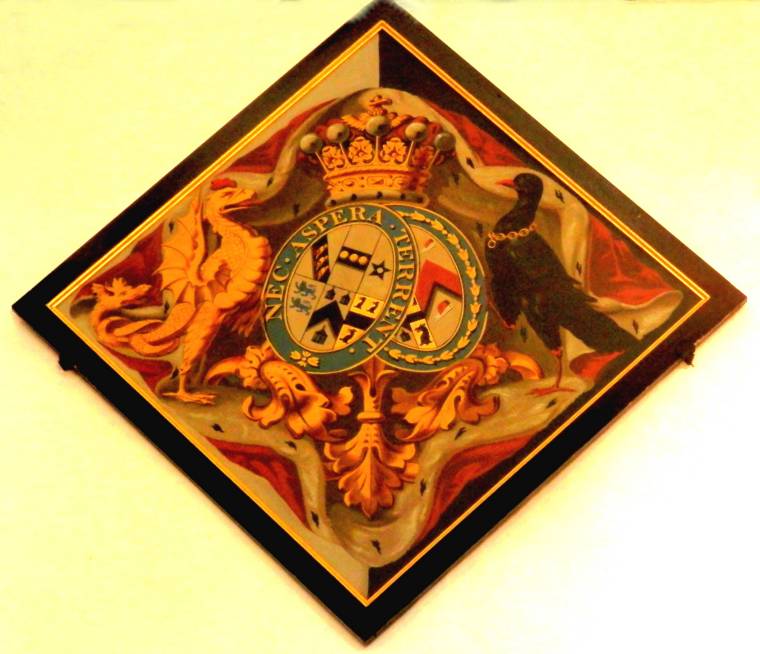
The Countess’s initials ‘HGH’ and coronet are displayed on the gable and her hatchment hangs in the nave of the church.

© Miles Green, Penn Parish Newsletter, No.3, June 2008
Photographs courtesy Eddie Morton, ARPS

Addendum: ‘Penn Church School’
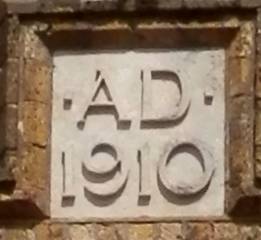
Boys joined the girls not long after their school at Church Knoll was closed in 1875, and the building was extended in 1910, to a design by Harrison-Townsend.  The school closed in 1949 for lack of pupils. Miles Green, ‘Mansions and Mud Houses’, 2007, p12.

This entry was first published by .

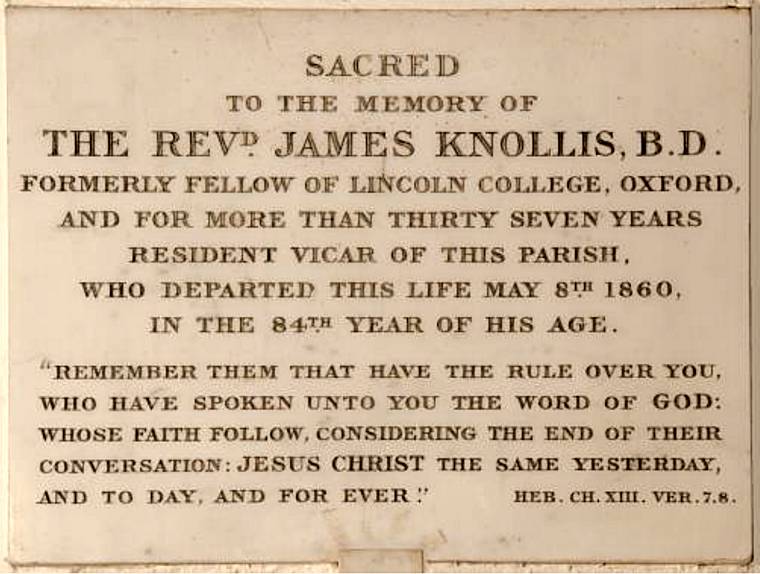
Revd James Knollis (1776-1860), Vicar of Penn (1823-60)

James Knollis was from Burford in Oxfordshire. He had an Oxford MA and BD, and was a Fellow of Lincoln College from 1795-1815. Besides being resident Vicar of Penn from 1823, he was also perpetual curate of Maidenhead from 1819 until his death. He straightaway built the Old Vicarage for the very considerable sum of £1,400, at his own expense, in 1825, noting that it had ‘Ground floor, 4 rooms, 2 kitchens, 2 pantries; on first floor, 6 bed chambers, 2 dressing rooms and a water closet.’
He also noted that the churchyard had been fenced-in with rails at the charge of the parishioners.

‘The Old Vicarage’
See also ‘A secret passage’

The excitement of two visits by King William and Queen Adelaide, in 1833 and 1835, is recorded in two long letters from his wife, Frances. In her first letter, she records that they received the King and Queen at the Old Vicarage with Earl Howe and his wife. They remained only a short time in the Drawing Room and were then accompanied to the Church for the christening of Adelaide Ida, the Howe’s eldest daughter. After a visit to The Knoll, to admire the view towards Windsor, The King and Queen and Mr Knollis were later entertained to dinner at Penn House.

In 1845, Knollis had to surrender his Penn Street parishioners to Earl Howe’s desire for a new church there, and so when, in 1852, Philip Rose was looking for more parishioners to justify his proposal to build St Margaret’s Church, James Knollis was not in the least inclined to see the process repeated and understandably dug in his toes at the prospect of ceding any more of Penn parish, despite pressure from Earl Howe. Eventually, the beleaguered Mr Knollis offered up only “the 51 households on the Hill” i.e. from Potters Cross up Dog Hill. The final boundaries were not agreed until after his death.

Casimir de Genouillac, who was one of the boys at the French School in Penn, left the school in 1808, aged 17, with only 12 guineas to see him on his way, and eked out a living as a teacher in small schools around Penn. He had to endure the widespread, indiscriminating and sometimes violent hatred of all things French and Catholic. “No Jews, no wooden shoes, no Popery” was a popular cry of the day. He was also permanently in debt and at times despaired for his future, but eventually found a more agreeable post, at a small school near Newbury, under the Rev. James Knollis who became a good friend, long before he was to become Vicar of Penn.

In 1814, Napoleon was exiled to Elba and Casimir was at last able to return to France. Not long after his return, James Knollis wrote to Casimir to report that ‘As to the peace, there were great rejoicings everywhere and there was plum pudding at Newbury drawn by oxen and boiled by steam, 28 feet long.’ He wrote again the following year after Waterloo, ‘Let us now pray that the two finest nations in the world may not be permitted to ruin first each other, and ultimately themselves.’ Truly glad will I be to see you – and whenever you like to come over and can do so – let this be your invitation!

His widow Frances Knollis, lived in The Knoll behind the church, for 20 years after he died.

© Miles Green,Penn Parish Newsletter No.49, March 2017
Photographs courtesy of Eddie Morton ARPS

This entry was first published by .

Revd James Knollis, Vicar of Penn (1823-60) Continued

We have already noted that In 1845, the Revd James Knollis had to surrender parishioners to allow Earl Howe’s desire for a new church at Penn Street, and again, in 1852, when Philip Rose was looking for more Penn parishioners to justify his proposal to build St Margaret’s Church. The reason for all this church-building was a widespread view that the Anglican church was in a bad way. Churches were often in a poor state of repair and held staid Prayer Book services, with few hymns, long theological sermons and seating arrangements with pew rents which reflected a rigid social pecking order.

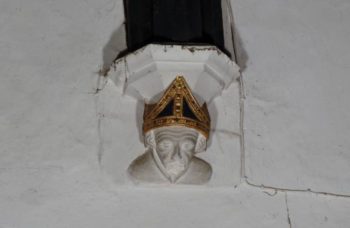
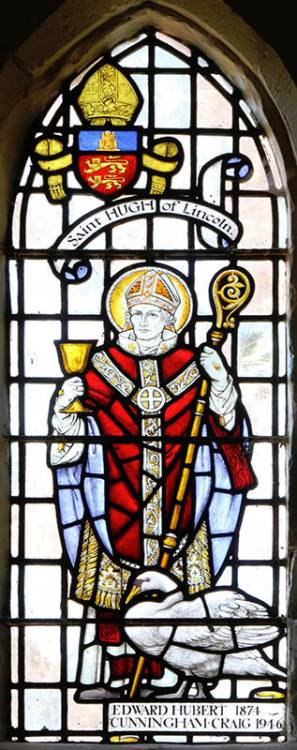
One of the corbels supporting the nave roof in Penn Church, dating from c.1400. It is a medieval Bishop thought to be St Hugh of Lincoln. Photograph by Eddie Morton. St Hugh was Bishop 1186­1200. A French nobleman, he was an exemplary bishop and is the Patron Saint of the sick, shoemakers, and swans.
The second Sir Philip Rose, recalling his boyhood in the 1840s, remembered Penn Church, “It was a dreary old Church in those days with richly cobwebbed windows in the corners of which huge spiders lurked and a Service as dreary as the Church, the spiders being much more interesting than the sermons:’ He also remembered the church in London to which they used to go. ” Twice every Sunday to Church ….. And woe betide any servant who did not put in an appearance …. .It was bad for any of us who did not remember the text of the long sermon when we got home. No music, toys or games were allowed on Sunday, and cards were looked upon as the ‘devil’s plaything’, and were under no circumstances to be allowed in the house.”

St. Hugh

Sir George Grove, Editor of the Dictionary of Music and Musicians, and the first director of the Royal College of Music from its foundation in 1883, whose father came from Penn, remembered the Church of England in 1830 as having been, “a mass of deadness and stiff dullness. The old Wesleyan Evangelical movement had died down and the clergy were a body without a soul”.

Inspired by the Oxford Movement, the Anglican Church instituted radical reforms. The diocese of Lincoln, which had stretched unchanged from the Humber to the Thames, was split up and henceforth Penn was to come under the Bishop of Oxford. 106 churches were built in the new diocese of Oxford during the time of the first new Bishop, Samuel Wilberforce, between 1845 and 1869, including those at Tylers Green, Penn Street and Hazlemere. Churches all over the country were encouraged to restore the medieval arrangements of the Decorated period (c.1280-1380). A good deal of unnecessary damage was done to many old churches and Penn Church did not escape, as we shall see when the next Vicar arrives in 1860.

Miles Green, Penn Parish Newsletter No.51, September 2017

The stained glass window in the tower also depicts St Hugh and sits in the lancet window in the tower, of c.1325 in memory of a parishioner who died in 1946. Photograph by Michael G. Hardy from the ‘Stained Glass of Buckinghamshire Churches‘ website.

This entry was first published by .